The post What’s The Difference Between N95 and KN95 Masks? appeared first on H4 HealthCare.
]]>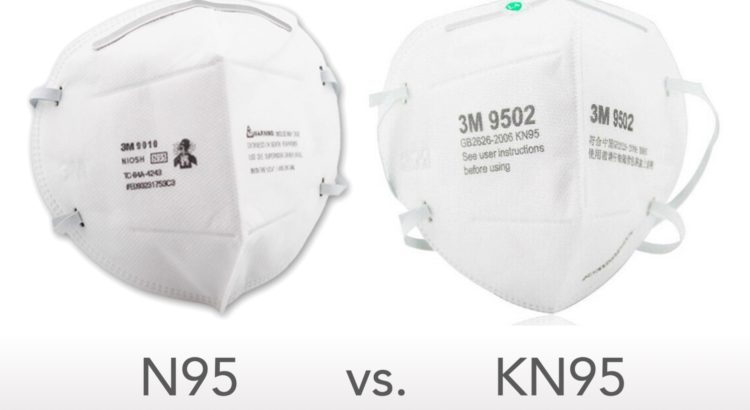
With such similar sounding names, it can be confusing to understand the difference between N95 and KN95 masks. What are KN95 masks, and are they the same as N95 masks? This handy chart explains the differences between N95 and KN95 masks (and all characteristics that are the same).
In short, N95 masks are the US standards for respirator masks; KN95 masks are the Chinese standards for masks. These are the requirements that the US National Institute for Occupational Safety and Health requires manufacturers to meet in order to label their masks as N95s. Despite the long list of differences, the two masks are equivalent or nearly equivalent on the features that most people care about.
N95 vs. KN95 Comparison Chart
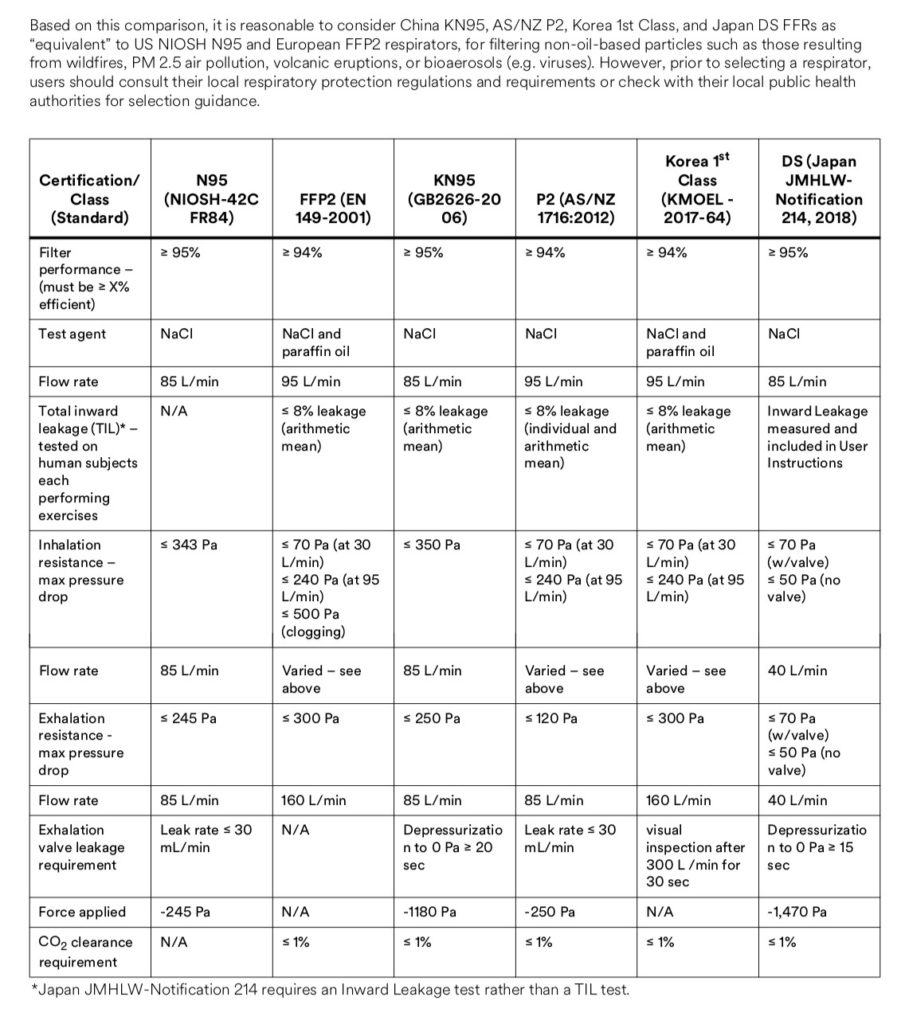
According to mask manufacturer 3M, “it is reasonable to consider” China’s KN95s “equivalent” to US N95s. Mask standards for Europe (FFP2), Australia (P2), Korea (KMOEL), and Japan (DS) are also highly similar.
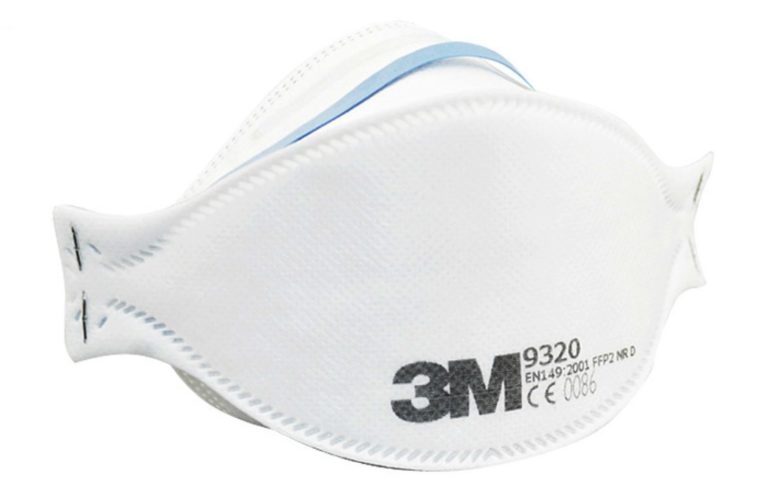
N95 vs. KN95: What’s The Same?
Lots of users care most about what percentage of particles the masks capture. On this metric, N95 and KN95 respirator masks are the same. Both masks are rated to capture 95% of tiny particles (0.3 micron particles, to be exact).
Since N95 and KN95 masks are rated to capture 95% of 0.3 micron particles, people will often assume that masks can’t capture particles smaller than 0.3 microns. For example, here’s an infographic in the South China Morning Post claiming just this. They even go so far as to say “N95 respirators protect the wearer from breathing in particles bigger than 0.3 microns in diameter.”
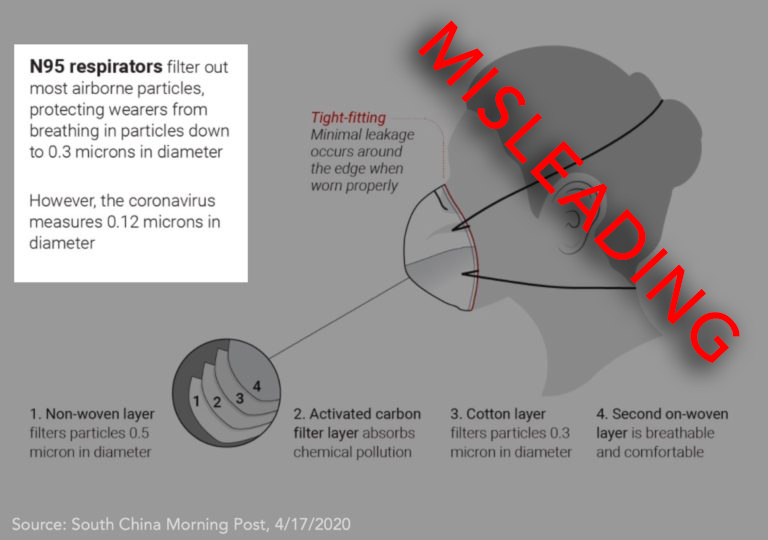
However, that’s not true. Masks are actually more effective at capturing smaller particles than many people believe. Empirical data finds that masks are actually highly effective at capturing smaller particles.
Difference Between N95 vs. KN95 Masks
Both ratings require masks to be tested for filtration efficiency at capturing salt particles (NaCl). Both are tested at a flow rate of 85 L/minute. However, there are some differences between N95 and KN95, highlighted here.
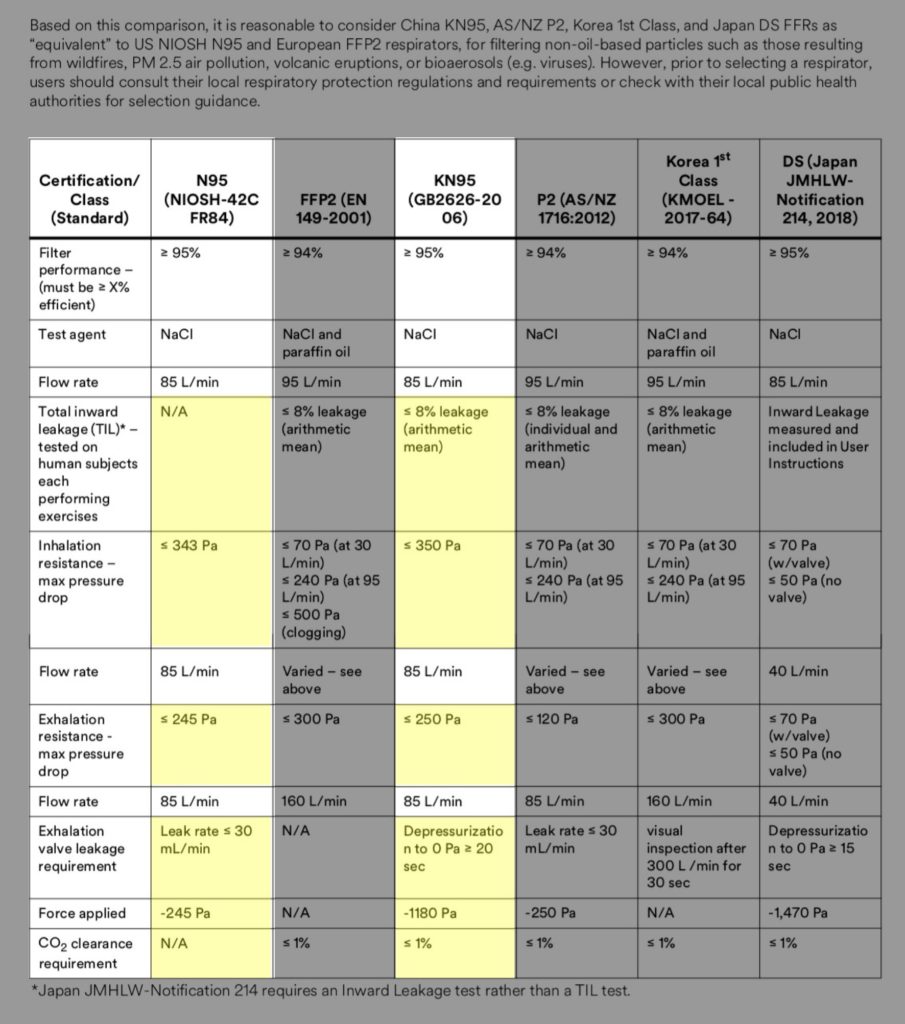
Most of these differences are small and would be uninteresting to the average mask user. However, here are the key differences:
- To be certified as a KN95 mask, the Chinese government requires the manufacturer to run mask fit tests on real humans with ≤ 8% leakage. The N95 mask standard does not require manufacturers to run fit tests. This does not mean that fit tests aren’t helpful. Many hospitals and companies require their workers to be fit-tested. However, those are requirements of companies themselves, not for the US NIOSH certification on the mask.
- N95 masks have slightly stricter requirements for pressure drop while inhaling. That means they’re required to be slightly more breathable than KN95 masks.
- N95s also have slightly stricter requirements for pressure drop while exhaling, which should help with breathability.
- N95s and KN95s are both rated to capture 95% of particles, although only KN95 masks are required to pass fit tests. N95 masks have slightly stronger requirements for breathability.
Source:smartairfilters
The post What’s The Difference Between N95 and KN95 Masks? appeared first on H4 HealthCare.
]]>